About RDUMesh
RDUMesh builds community-owned, off-grid radio communications infrastructure across the North Carolina Piedmont—ensuring neighbors can reach each other when internet and phone networks fail.
The Problem
When hurricanes knock out power, when flooding destroys cell towers, when cyberattacks compromise internet systems—traditional communication fails. And people need to reach each other most in exactly those moments.
Hurricane Helene in 2024 showed us what happens: communities isolated for days, unable to coordinate rescues, share warnings, or check on neighbors. This isn't an edge case. It's the inevitable consequence of depending entirely on infrastructure that runs through cables in the ground.
A Different Kind of Network
Radio signals travel through the air. They can't be cut by a fallen tree or flooded out by rising water.
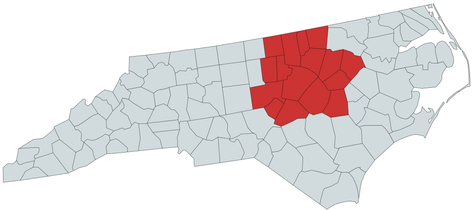
RDUMesh uses LoRa radio technology on unlicensed frequencies to create a mesh network of solar-powered relay stations across 16 counties. When you send a message, it hops from station to station until it reaches its destination—no internet required, no cell towers needed, no monthly bill.
This isn't new technology. Amateur radio operators have provided emergency communications for decades. We're making that capability accessible to everyone.
Not Just for Disasters
The mesh network shines during crises—but it's useful all the time.
Ever tried to text someone at a packed concert, the NC State Fair, or Hopscotch? Cellular networks get overwhelmed fast when thousands of people flood into the same area. The mesh keeps working because it doesn't depend on cell towers.
Use it to stay connected with friends and family at crowded events, coordinate with your hiking group in areas with spotty coverage, or just chat with neighbors. The more people use it during normal times, the more familiar everyone is when it really matters.
What We Are (and Aren't)
RDUMesh IS:
- Off-grid radio infrastructure for text messaging and coordination
- A backup system that works when everything else fails
- Community-owned and operated
- Free to use
RDUMesh is NOT:
- Internet service or WiFi
- A replacement for broadband
- A commercial competitor to phone carriers
We solve a different problem: What do communities communicate through when the internet and phones are down?
Our Region
We serve the 16-county area around the Research Triangle:
Primary Service Area: Wake, Durham, and Orange counties
Extended Service Area: Chatham, Edgecombe, Franklin, Granville, Harnett, Johnston, Lee, Nash, Person, Vance, Warren, Wayne, and Wilson counties
This region shares economic ties, transportation networks, and vulnerability to the same disasters. When a hurricane hits, it doesn't stop at county lines.
Who We Serve
We prioritize communities hit hardest by infrastructure failures:
- Low-income residents
- Rural areas beyond reliable cell coverage
- Elderly populations
- Immigrant communities
- People with disabilities
- Community organizations like food banks, shelters, and mutual aid networks
- Emergency responders and CERT teams
The people who have the fewest backup options are our first priority.
How It Works
Repeater stations mounted on community buildings, churches, water towers, and private property relay messages across the region. Each station runs on solar power with battery backup, so the network keeps running when the grid goes down.
We also need backbone infrastructure—rooftop access at taller buildings in Raleigh, Durham, and Chapel Hill to link neighborhood repeaters across longer distances. If you manage a building with rooftop access, we'd love to talk.
Room Servers are a special node type in the MeshCore protocol that act as neighborhood bulletin boards. Anyone on the mesh can post and read messages from these servers. During a crisis, they become critical hubs for sharing local updates—road closures, shelter locations, resource availability. The rest of the time, they're great for posting about local events and community happenings.
Client devices—small handheld radios—connect you to the mesh. Send a text message, and it bounces through the network until it reaches your neighbor, your family member, or your emergency coordinator.
Redundancy is built in. If one station fails, messages route around it. There's no central point of failure.
Our Values
Community ownership: The network belongs to the people it serves, not a distant corporation.
Equity first: We deploy to underserved communities before wealthy ones.
Independence: We don't depend on commercial infrastructure. That's the whole point.
Transparency: Open governance, open protocols, open books.
Built to last: We're creating permanent infrastructure, not a temporary project.
Get Involved
We're building something that takes a community:
- Tell us about communication gaps in your neighborhood
- Host a repeater on your rooftop or property
- Distribute devices through your organization
- Donate to fund infrastructure
- Volunteer your technical skills
- Partner with us if you work in emergency management or local government
Organization
RDUMesh is a 501(c)(3) nonprofit governed by a board representing community members, emergency management, technical experts, and community organizations across the region.
When the grid fails, who can you reach?
RDUMesh exists so the answer is: your neighbors.