Recommended Hardware

Just getting started? We have ideas about what devices are best to start out with.

Recommended Hardware

Companions

Companion nodes are nodes that send and receive messages and are how people interact with each other over the mesh. If you're looking for your first node, a companion is what you'll want to start with.

Cards & Clips

Card nodes are a great option for getting started. They're very easy to carry around in a pocket or attach to a bag, and typically have some form of water resistance so they're great for outdoor use. Since they don't have a display, you'll need to pair with a phone to send/receive messages with these.

SenseCAP Card Tracker T1000-E for Meshtastic
It is a high-performance tracker designed for Meshtastic, as small as a credit card, effortlessly fitting in your pocket or attaching to your assets. It embeds Semtech’s LR1110 (Supports 863-928 MHz range), Nordic’s nRF52840, and Mediatek’s AG3335 GPS module, providing Meshtastic users with a high-precision, low-power positioning and communication solution.
WisMesh Tag from RAKwireless & MOKOSmart - Meshtastic compatible card
What is WisMesh Tag? The WisMesh Tag is your compact companion for location tracking and mesh messaging. Built for Meshtastic users who want something portable, reliable, and ready-to-go. Unlike DIY builds or limited designs like the T1000E, the WisMesh Tag delivers reliable outdoor performance with a 1000mAh battery,

Handheld

These nodes are bulkier than the cards above, but you gain the ability to use an external antenna as well as a display for checking the node's status and reading messages without needing to have a phone paired.

This class of device is also where you'll see more microcontroller options. We recommend looking for nRF52-based nodes, since they're significantly more power-efficient than ESP32-based ones.

Some pre-assembled nRF-based options:

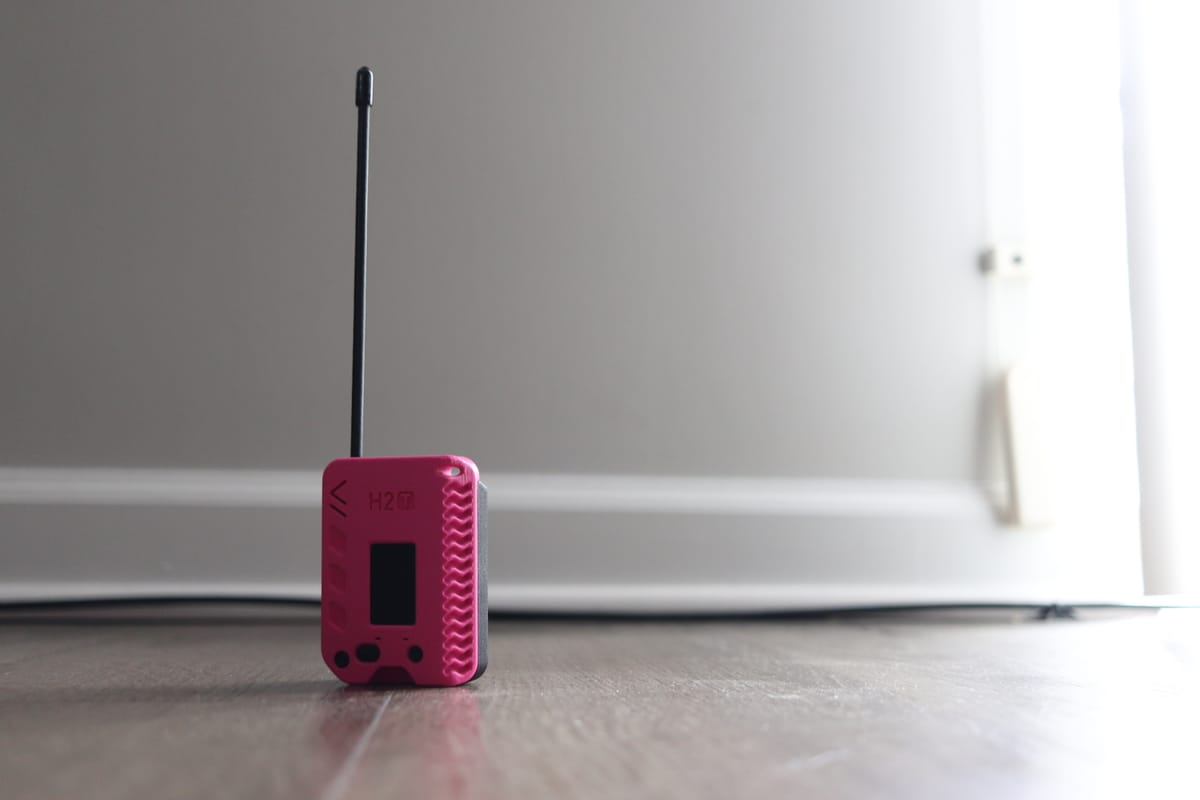
H2T - Complete Device: Heltec T114 with GPS running Meshtastic®
THIS IS IN PRE-ORDER [Restock late-February] A GPS enabled Meshtastic® device powered by the Heltec T114 V2 board. Unique 3D printed design, now in ASA for ultimate UV and heat resistance. Using the power efficient nRF52840 chipset, the H2T will last over 2 days with GPS enabled. Stay connected to the Meshtastic® app o
Elecrow ThinkNode M1 LoRa Meshtastic radio + 1.54″ EPD Screen GPS nRF5
ThinkNode M1 Meshtastic Device – Stay Connected Without Internet Prices may be higher than manufacturer’s website as tariffs are included The Elecrow ThinkNode M1 is a compact, high-performance Meshtastic device designed for outdoor adventures, emergency communications, and environmental monitoring. With powerful LoRa

You can also buy a bare Heltec T114 and bring your own case, battery, and antenna if you prefer to DIY:

Heltec Mesh Node T114 with optional 1.14 inch TFT display (v2 version
Heltec T114 v2, updated December 2024.Mesh Node T114 is a Low Power Consumption development board based on nRF52840 and SX1262, supports LoRa and Bluetooth 5.0 with integrated various power interfaces (5V USB, lithium battery and solar panel) optional 1.14 inch TFT display, and has powerful long-distance communication

The Heltec V3 is another popular and cost-effective option that can be bought as a kit or just the bare board, but note that its battery life will be worse due to it being ESP-32 based. For battery-powered nodes that you carry with you, we advise picking something nRF-based instead, despite the popularity of the V3.

Standalone

Standalone nodes include a keyboard and larger display, which allows sending and receiving messages without carrying a phone. These nodes are the most expensive, but also the most full-featured. Firmware such as Ripple or MeshOS are most frequently used on these to best take advantage of the extra power and features.

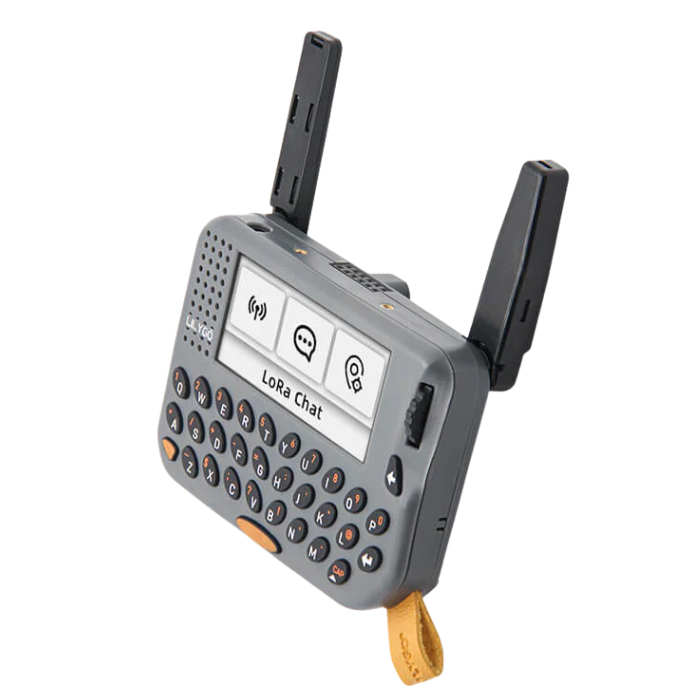
LILYGO® T-Deck Portable Microcontroller Programmer LoRa 915 MHz
T-Deck is a pocket-sized gadget with a 2.8-inch, 320 x 240 pixel IPS LCD display, a mini keyboard, and an ESP32 dual-core processor. It is not a smartphone, though it looks like one- but you can use your programming knowledge to turn it into a standalone messaging device, or use with coding software for programming. Ro
LILYGO® T-Lora Pager US 915 Mhz LoRa + ESP32-S3 Handheld AIOT Programm
Why is pricing higher than LILYGO site? For USA there are 27.5% import tariffs that are already included in the price. This item also ships free within the USA. The price you see on our site is your total price, with sales tax collected in some states.T-Lora Pager is the new member of the LILYGO T series, the compact e

Antennas

For nodes with an external antenna connector, the stock "stubby" antenna that comes with many nodes can be a limiting factor for range. If you'd like to improve your RF performance, upgrading to a better antenna is a way to do that (though there are many other factors at play - bad terrain and repeater proximity can still cancel out any improvement you might see from a better antenna.)

The Muzi Works whip antenna is the most commonly recommended upgrade:

Whip Antenna – 17cm
Upgrade your antenna to this flexible whip design. Improves performance, measured SWR of 1.3 compared with the stock stubby antenna at an SWR of 3.5. SWR is a measure of transmission efficiency, how much power from the LoRa radio makes it out into the world via the antenna. SWR 1.3 = 98% efficient SWR 3.5 = 69% efficie

There's many other antenna vendors out there, but be wary of no-name or counterfeit sellers - advertised specifications are not always correct.

Repeaters

Repeaters are responsible for routing traffic across the mesh, and define the "backbone" of the network. To reach someone else on the mesh, there needs to be a path of repeaters between your companion node and theirs for the message to pass through. Most repeaters are solar powered to ensure that the mesh remains intact even if grid power fails.

Adding repeaters in strategic locations is key to improving coverage of the mesh, both on towers and tall structures for regional coverage, as well as roofs, attics, and balconies for stronger neighborhood-level coverage.

Pre-built

PeakMesh Magnet Mover - Solar node for roofs and horizontal surfaces

PeakMesh Magnet Climber - Solar node for poles and vertical surfaces

PeakMesh Altitude - Hanging solar node for trees

SenseCAP Solar Node P1-Pro for Meshtastic
It is a solar-powered communication node that integrates the XIAO nRF52840 Plus main controller, the Wio-SX1262 LoRa module, and the XIAO L76K GPS module. It is specifically designed for areas without network coverage. With a built-in battery, it supports long-distance communication, precise positioning, and low-power operation. It’s suitable for expanding network coverage in outdoor areas. Power your projects together! Enjoy an automatic 10% off when you purchase any two or more devices from the Wio Tracker L1 series (SKUs: 114993648, 114993649, 114993653, 114993654) and the Solar Node series (SKUs: 114993633, 114993643). Offer valid from January 27.

DIY

If you have the tools and know-how, building a repeater from parts is also possible, and in some cases may be more cost-effective than buying something pre-built. There are plenty of guides to building this type of node online.

For most repeaters, we recommend the RAK WisBlock series of boards:

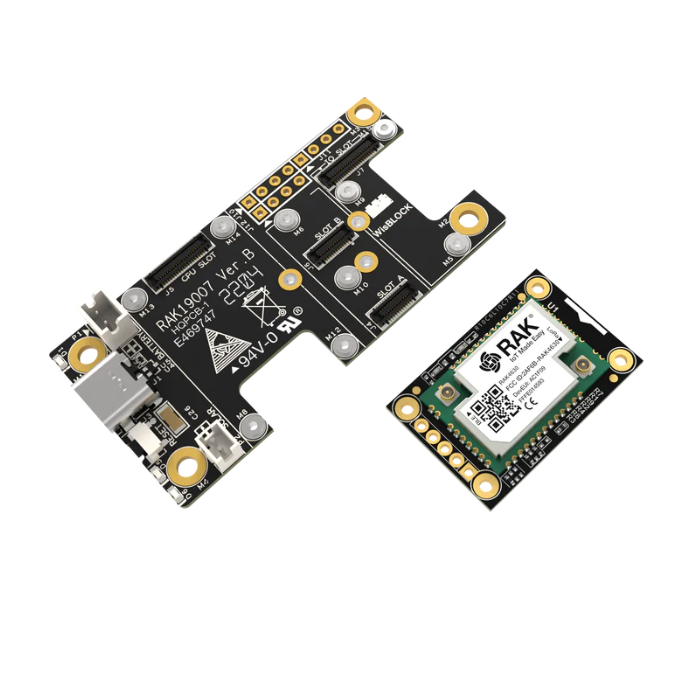
RAKwireless WisBlock Meshtastic Starter Kit US915 SKU 116016
Meshtastic® is an off-grid messaging system using inexpensive hardware to create your personal mesh. Radios forward messages to the next node to distribute them over the network. Communicate kilometers/miles between nodes. Internet-connected relay nodes enable the conversation to move online too.RAKwireless WisBlock Me

You'll also want a waterproof enclosure, batteries, solar panel(s), and antenna. Also consider how to get power connections into the enclosure - cable glands of an appropriate diameter are typically used for this.

Some boards like the RAK13302 and Heltec V4 are capable of 1W transmit power. While other nodes may be able to hear a 1W repeater from further away, the repeater won't be able to hear replies from weaker companion nodes at those ranges. Because of this asymmetry, we recommend using a board with lower transmit power in most cases to ensure that traffic can flow bidirectionally - optimal placement and elevation can improve RF performance much more than an increase in power can anyway.

1W nodes are most useful as a workaround to "punch through" tricky terrain or buildings where clear line of sight isn't possible, but they should not be considered the default - a well-placed low-power repeater will almost always outperform a sub-optimally placed high-power one.

Antennas

📡
Note that antenna gain and range are two different things. While a higher gain antenna may reach "further" horizontally, its coverage area is flattened vertically - nearby nodes higher or lower in elevation than the plane of the antenna will have a worse connection to a high gain antenna. Because of this, very high gain antennas are not effective in this area's hilly terrain.
We recommend gains of around 3-5 dBi, even for longer distance links.

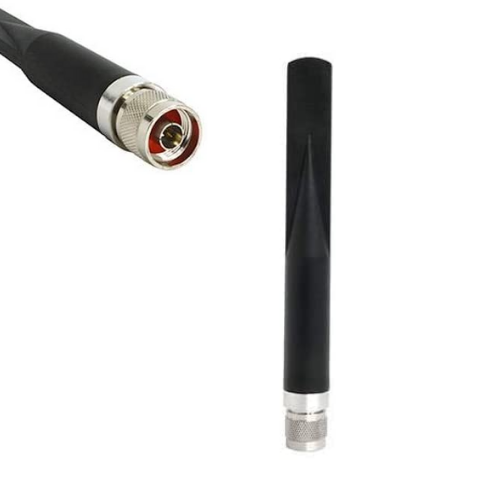
A frequent recommendation for repeaters is this ALFA model (beware of counterfeits):

ALFA AOA-915-5ACM 5 dbi Omni Outdoor 915MHz 802.11ah Mini LoRa Antenna
ALFA Network AOA-915-5ACM is the original dipole small form factor antenna for the People’s Network (Helium) and IoT. Are you an ISP or installer looking to print your company’s name on the antenna, contact us for bulk/OEM order options.This antenna is compatible with Meshtastic devices (requires N-female connector),

Larger outdoor antennas typically use an N-type connector, so you may also need to purchase a pigtail/adapter to connect the antenna to the SMA or U.FL connector on your node. Pre-built nodes usually include this.